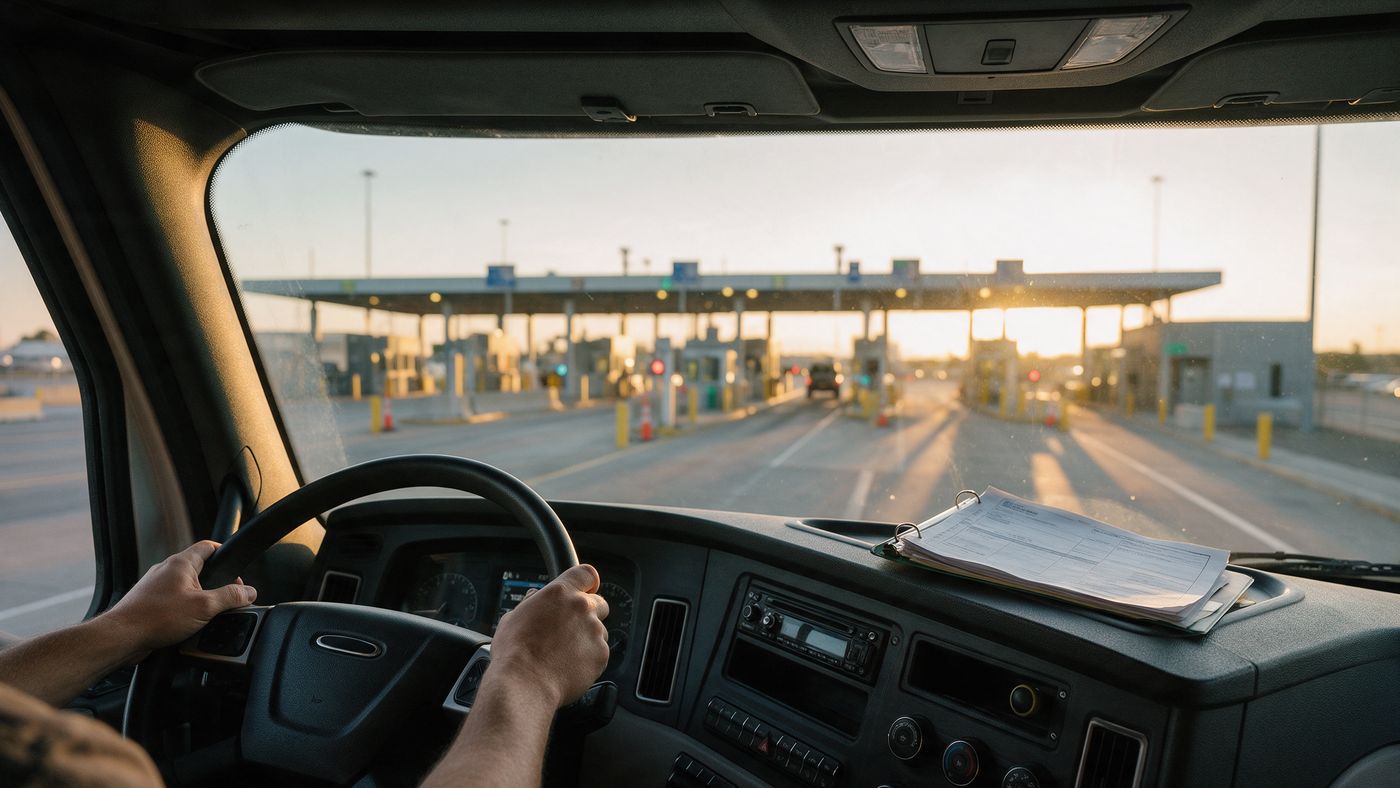
For a plant in Tijuana, shipping to San Diego looks like a short haul: only a few miles. But between those two points there are two customs authorities, two legal frameworks and one of the busiest commercial borders on the continent. Understanding how the crossing works helps you plan better, avoid detention charges and give your customers realistic delivery dates.
This guide summarizes the typical path of an export from Mexico into the United States through the Otay Mesa commercial port of entry. Imports into Mexico follow a similar logic in reverse.
1. Quote and trip scheduling
It all starts with the basics of the shipment: origin, destination, commodity, weight or pallet count and target date. With that, the carrier confirms equipment availability, timing and rate. This is also the moment to confirm who your customs agent in Mexico is and who will act as your customs broker in the United States, because all three — carrier, agent and broker — need to work in sync.
2. Paperwork on the Mexican side
Exports are cleared through Mexican customs by a licensed customs agent. The most common documents are:
- Commercial invoice and packing list.
- Export pedimento, the Mexican customs declaration filed by the customs agent.
- CFDI with the Carta Porte supplement, which covers the movement of the goods inside Mexico. We explain what it contains in our Carta Porte guide for exporters.
A common mistake is dispatching the truck before the pedimento is ready. The result is a tractor waiting in line with nowhere to go.
3. Advance notice to U.S. Customs
On the U.S. side, the carrier must transmit an ACE e-Manifest to U.S. Customs and Border Protection (CBP) before reaching the border. The general rule is at least one hour before arrival; shipments moving under the FAST program can transmit 30 minutes ahead. In parallel, the customs broker prepares the customs entry for the goods.
Practical tip: send your broker the commercial invoice as soon as you have it. Most delays on the U.S. side come from documents that arrive late or with incomplete product descriptions.
4. Pickup, loading and sealing
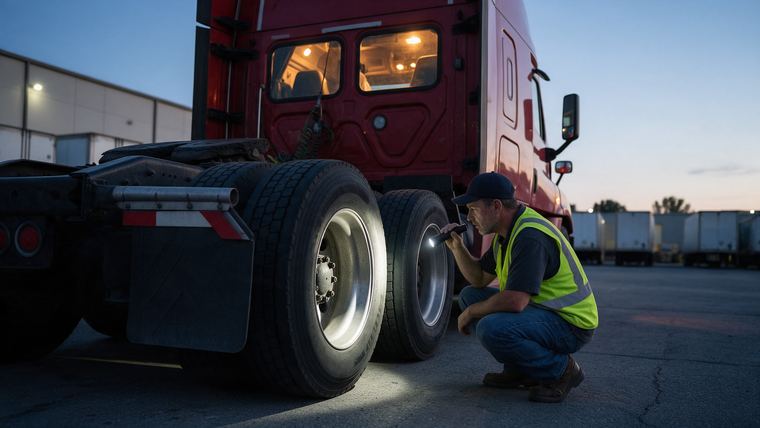
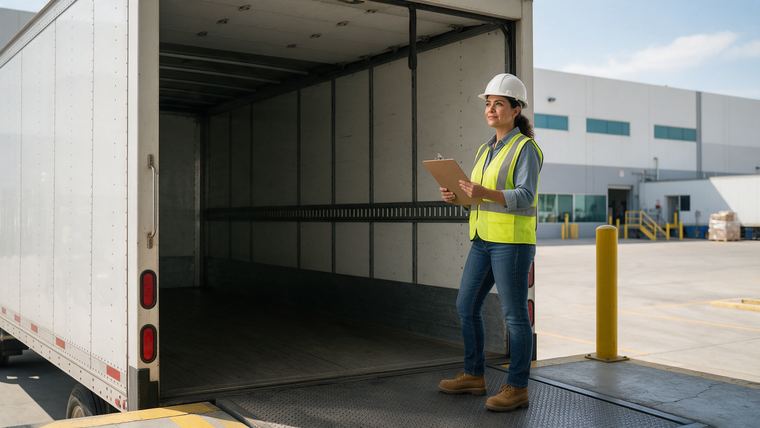
The truck arrives at your plant at the scheduled appointment. The trailer is checked before loading; once loaded, a seal is applied and its number is recorded on the shipping documents. That number will be verified at the border and at destination, so it has to match exactly.
5. Crossing at the commercial port of entry
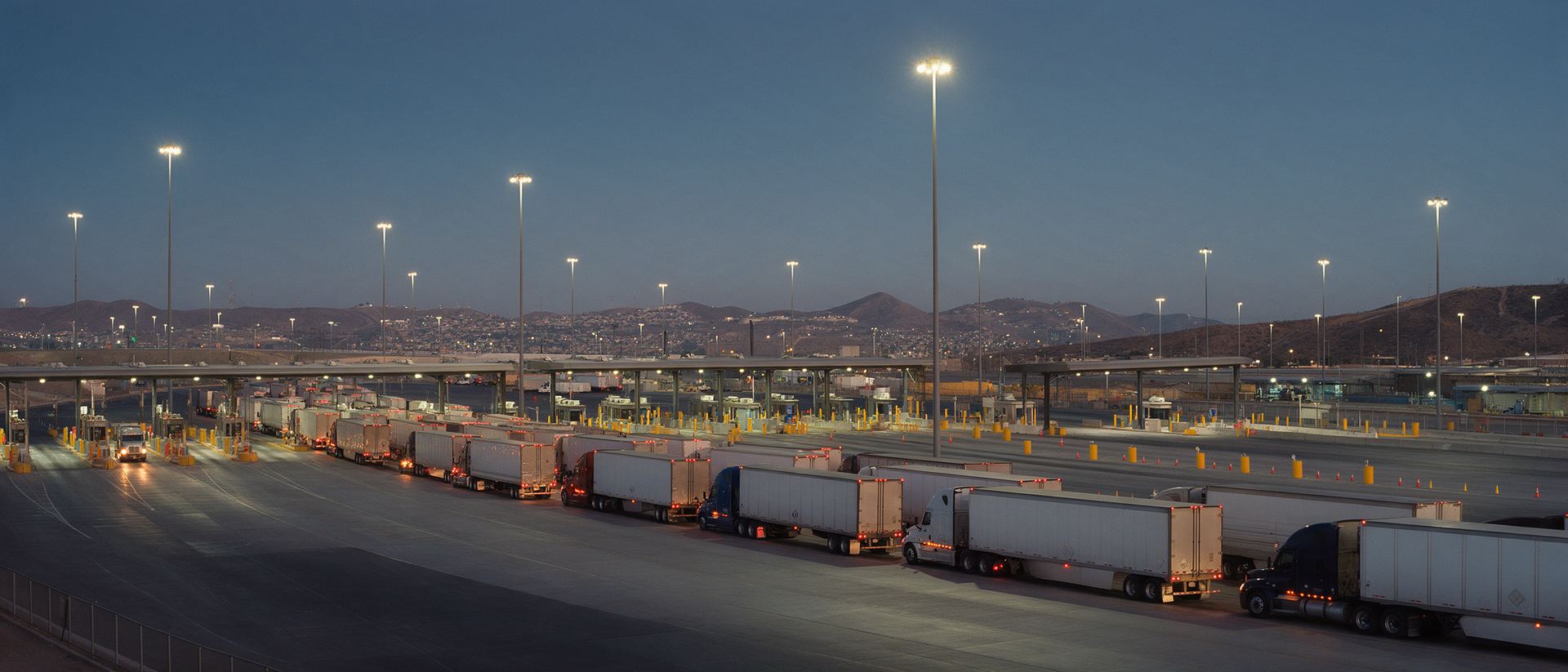
In Tijuana, commercial traffic headed to San Diego crosses at the Otay Mesa port of entry. The crossing has two stages:
- Leaving Mexico: the truck goes through Mexican customs, where the automated selection system determines whether the goods are inspected or released.
- Entering the United States: CBP performs the primary inspection and may send the truck to secondary inspection or non-intrusive X-ray screening. On the California side, the truck may also be routed through the commercial vehicle inspection facility.
Wait times vary widely by day, hour and season. That’s why an experienced carrier plans departures around the least congested windows.
6. Delivery
Once released, the truck continues to the warehouse, distribution center or final customer. At delivery, the seal is verified, the freight is unloaded and the proof of delivery is signed. That document closes the trip and lets your team invoice.
What usually delays a freight crossing
- Pedimento or U.S. entry not ready when the truck is already rolling.
- Differences between the invoice, the packing list and the actual freight.
- A seal number that doesn’t match the documents.
- Generic product descriptions that trigger an inspection.
- Departures scheduled during the port’s peak hours.
- Poor communication between plant, customs agent, broker and carrier.
How to reduce the risk of delays
The recipe is less glamorous than it sounds: complete paperwork before the truck moves, one communication channel and a carrier that tells you in real time when something changes. At ADR Transport we keep dispatch, driver and customer in direct contact for exactly that reason — so you know where your freight is without chasing anyone.
Note: customs requirements and notice times change over time. Always confirm the details of your operation with your customs agent and customs broker.